Why Your Club Needs an Owned Channel (Not Just Social Media)
By David Sullivan & James Hodge · Updated
Post your team sheet on Facebook and roughly one in twenty of your followers will see it. Not one in twenty of the town — one in twenty of the people who already went looking for your club and pressed follow.
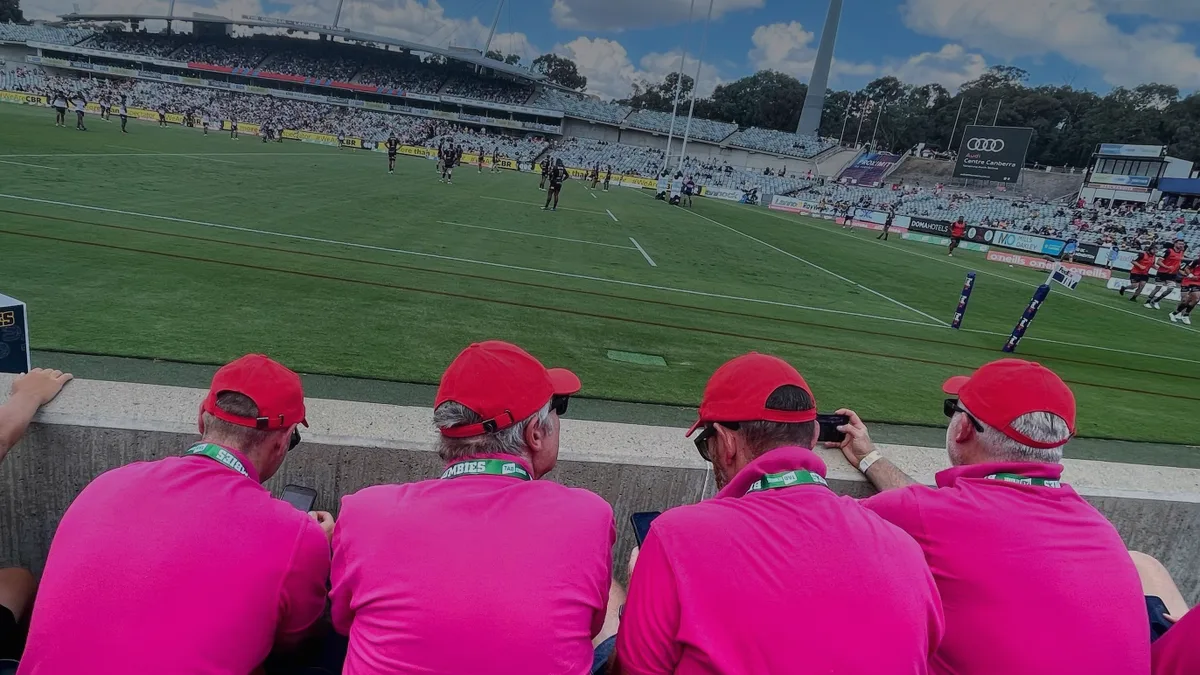
Post your team sheet on Facebook on a Saturday morning and roughly one in twenty of your followers will see it. Not one in twenty of the town. One in twenty of the people who already went looking for your club and pressed follow.
The average organic reach on a Facebook page across 2026 is 5.2%, measured monthly by analytics platform Social Status across hundreds of thousands of pages. Nineteen in twenty of your followers never get the chance to read what your club wrote.
That is the problem an owned channel solves.
Being ignored and never being delivered are two different problems
This is the part that costs clubs the most, and almost nobody separates it.
A volunteer writes a post at 11pm on a Tuesday. Finds the photo, gets the names right, checks the spelling of the kid who kicked five. Three likes.
The reasonable conclusion is that nobody cares anymore. So the club posts less. Stops bothering with the junior results. Quietly decides the community has moved on.
The community has not moved on. The message did not arrive.
Low engagement on a social post is not a verdict on your content. Most of the time it is a distribution number wearing a disguise, and clubs make real decisions off the wrong one.
What an owned channel actually means
An owned channel is one where your club decides who receives a message, rather than a ranking system deciding on your behalf.
For a community club, the practical version of that is a branded app. Your badge on the home screen. Your news inside it. When you send something, it goes to the people who installed it, because they asked for it.
Three things change the moment a club owns the channel:
- •You decide what is important. No feed reordering your season launch below somebody’s holiday photos.
- •The list is yours. If a platform changes its rules, or its pricing, or disappears, the relationship with your supporters does not go with it.
- •The people on it chose to be there. Nobody installs an app for a club they are lukewarm about. That is a meaningfully different audience from a follower count.
Worth reading next: Stop Renting Your Audience: What Fan Accounts Actually Change.
Push notification against social post
The difference is structural before it is numerical.
A social post is submitted to a ranking system that decides how many people see it, using signals your club does not control and cannot inspect. A push notification is addressed to everyone who installed your app.
One is a request. The other is a delivery.
Not everyone will have notifications switched on, and some will turn them off, so it is not a guarantee either.
The practical test for a club is simple. Sort your communications into two piles: messages supporters might like to see, and messages they have to see. Ground changes. Wet weather calls. Registration closing. Time and place of the presentation night.
The second pile is the one that should never depend on a ranking system.
Push Notifications for Sports Clubs: The Complete Guide covers what to send, how often, and how to avoid the mute button.
This is not about abandoning social media
Social media is still the best tool anyone has built for being found by people who have never heard of your club. Keep posting.
The distinction that matters: social is where people discover you. An owned channel is where you keep them. Use the first to bring people in, and the second for anything that actually has to land.
Most clubs already run a website as well, usually one the league provides. Club App vs Club Website: Do You Need Both? works through which one earns its keep, and in what order.
What this looks like in practice
Belconnen United FC run Match Centre through their app. Scores go up live from a companion scoring tool, and the push notification fires automatically as they do. Supporters choose which teams they follow, so a parent following the under 14s gets the under 14s, and nobody has to build or maintain a mailing list to make that happen.
That is the shape of an owned channel at community level. Not a broadcast megaphone. A direct line to the people who show up.
Getting started
You do not need a budget or a developer to begin. You need about an hour.
- Audit what you are actually using. List every channel your club communicates through, including the group chats nobody set up on purpose.
- Split your messages into might-see and must-see. The Game Day Communication Checklist is a working template for the must-see pile.
- Work out what it is worth. The Club App ROI Calculator takes your member numbers, your sponsor count and the hours your volunteers spend on communications, and gives you a figure you can take to a committee meeting. No signup required.
- Take the argument to your committee. The Ultimate Briefing: Reach Is Not Relationship is a short staff briefing written for exactly that conversation.
- Start small and measure it. One team, one season. The Club App Launch Playbook covers the first thirty days, and How to Measure a Club App covers what to look at beyond download counts.
Common questions
How much reach does a Facebook post actually get?
Around 5.2% of a page’s followers on average across 2026, per Social Status’s monthly organic reach benchmark. It moves month to month and it varies with page size, so treat it as a ballpark rather than a promise. Check your own page insights for the number that applies to your club.
Does an owned channel mean leaving social media?
No. Social media is how people find you. An owned channel is how you reach the ones who already have.
Who runs it at a volunteer club?
Whoever runs the club now. Tiparra’s admin side is built to be used by someone doing it around a job, with no developer and no training day. See Digital Tools That Won’t Scare Off Your Volunteers.
What does it cost?
A community club app starts at $99 a month. Full detail on the pricing page.
See what this looks like for a community club
Your club, your app, your badge on the home screen, run by the people already running the club.
Prefer to see the admin side first? Inside Tiparra Mission Control is a walkthrough of the screen your club would actually use.
Sources: Facebook organic reach, Social Status monthly Facebook Organic Reach Rate benchmark, read 1 August 2026. The 5.2% figure is the mean of the seven monthly values published for 2026 (4.79, 6.01, 6.12, 4.34, 4.72, 4.98, 5.59).
Article Outline
- 1. Being ignored and never being delivered are two different problems
- 2. What an owned channel actually means
- 3. Push notification against social post
- 4. This is not about abandoning social media
- 5. What this looks like in practice
- 6. Getting started, and common questions
Ready to Put This Into Practice?
Create your App and see how Tiparra can help your club.
Create your App