
Stop Renting Your Audience: What Fan Accounts Actually Change
By David Sullivan & James Hodge · Updated
Count everyone at your ground on a Saturday. Now count how many of them your club could reach on Tuesday if it needed to. The second number is always smaller.
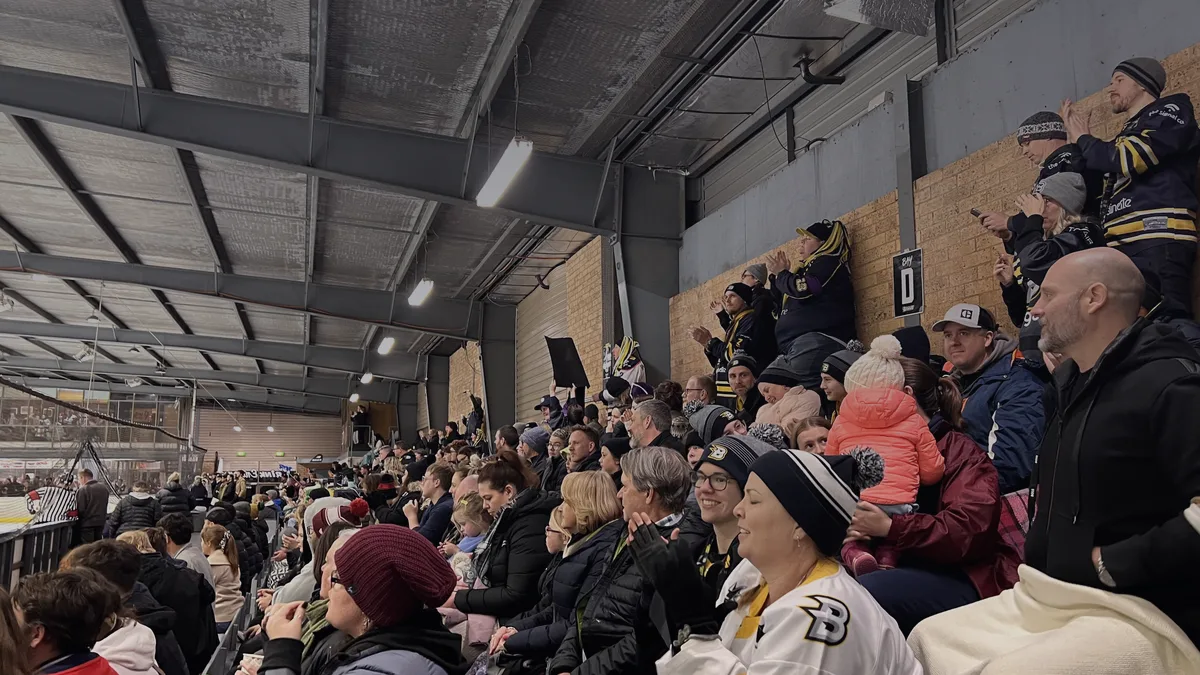
Stand at your ground on a Saturday and count the people.
Players and their parents. Grandparents on the fold-out chairs. The bloke who has been on the gate since 1998. The canteen crew, the away supporters, the sponsor who drove down to watch the firsts.
Now count how many of those people your club could reach on Tuesday if it needed to.
The second number is always smaller. At most clubs it is a lot smaller, and almost nobody has sat down and worked out why.
That gap is what Fan Accounts close.
Followers are a rental. Known supporters are yours
A social following is a list you do not hold. You can post to it, but you cannot export it, cannot segment it, cannot reach it on demand, and cannot take it with you if the platform changes its rules or its pricing.
The average Facebook page reaches about 5.2% of its followers with a given post, measured monthly across 2026 by Social Status. So even the list you appear to have is mostly theoretical on any given day.
That is not an argument against social media. It is an argument against social media being the only thing under a club.
A Fan Account is the moment a follower becomes a person your club actually knows. Someone downloads your app, creates an account, and in doing so raises their hand. That is a different relationship from a follow, because it was a deliberate act rather than a passing tap.
What actually changes
Four things, and they are more practical than they sound.
- •You know who is there. Not “an audience of 3,000”, but the parents of junior players, the life members, the volunteers, the people who turn up to everything.
- •You can talk to the right ones. A junior training update sent to a seventy-year-old life member is noise. Sent to a junior parent it is useful. Same message, completely different value, and the only thing separating them is knowing which is which.
- •You can reward turning up. Loyalty points, digital stamps, collectibles. These only work if the club can tell who did the thing worth rewarding.
- •Your sponsors get something better than a number. More on that below.
What this looks like when a club is running it
Belconnen United FC run Match Centre through their app. Scores go up live from a companion scoring tool and the notification fires as they go.
The part worth noticing is who gets it. Supporters choose which teams they follow. A parent following the under 14s gets the under 14s. Nobody at the club builds a list, maintains a list, or guesses.
That is Fan Accounts doing the work in the background. The club did not have to run a segmentation exercise. The supporters segmented themselves, because the account made it possible to ask.
What you can actually sell a sponsor
Most community club sponsorship is priced on exposure nobody counts. A sign on the fence, a logo in the newsletter, a mention at presentation night. The sponsor pays, the club says thanks, and next March everyone has the same conversation with no more information than they had the year before.
An offer running through Fan Accounts is a different product, because three things about it are countable.
- •Who it went to. Not “our supporters”. A defined group. Junior families. The people following the seniors. Everyone who opened the app this month.
- •That it arrived. A push notification goes to the people who installed the app, rather than to whoever a ranking system decides to show it to.
- •What happened next. Opened, and claimed.
That last one is the shift. It is the first time a community club has been able to show a sponsor an action rather than an audience.
Set it up so it is worth reporting
- •One sponsor per offer. Two competing offers in the same week and neither gets a clean read.
- •Give it an edge. A start, an end, and something worth having. “10% off” does nothing. “Free coffee with any breakfast, home games only, until the end of July” gets claimed.
- •Make it one tap. If redeeming means a code, a website and a form, your numbers measure friction rather than interest.
- •Send it when it is useful. Saturday morning for a matchday offer. Not Wednesday afternoon because that is when you got around to it.
What goes in the report
Four lines and a definition. Nothing fancy.
- •The group, described in words the sponsor understands
- •How many it went to
- •How many opened it
- •How many claimed it
Send it the week after the offer closes, not at the end of the season. A sponsor who gets a short report in round nine renews differently to one who hears nothing until the invoice.
What it changes about the price
You are no longer selling a position on a fence, so stop pricing like it. You are selling access to a defined group with a measurable response, which is a package rather than a placement, and it can be tiered.
The practical version: build two or three levels, put the measurable stuff in the upper ones, and let the fence sign be the entry tier it always was. The Digital Sponsor Playbook has a tiered framework and a four-step pricing method you can work through for your own club.
Worth reading alongside it: Beyond the Logo: How to Give Your Sponsors Something They Can Measure.
Why owning the data matters more each year
Third-party tracking keeps getting harder, privacy rules keep tightening, and platform reach keeps being something you rent rather than hold.
First-party data is the information people give your club directly, in exchange for something they actually want. It does not depend on a cookie, a pixel, or a platform’s willingness to keep letting you at it.
For a community club that is not a data strategy. It is just knowing who is in your club, which every club used to know when the whole thing ran off a clipboard and a landline.
Social is still the invite
None of this means deleting your Facebook page. Social media is the best tool anyone has built for being found by someone who has never heard of your club, and it is very good at that job.
The order that works:
- •Social media is the invite. Wide net, new people, no relationship required.
- •Your app is the clubhouse. Where the people who said yes actually spend time.
- •The Fan Account is the membership card. The thing that turns a visitor into someone the club knows.
The move to get right is the one in the middle. Give people a reason to walk from the invite into the clubhouse: live scores, the draw, offers worth having, content that is not on the feed. Once they are in, the relationship belongs to the club.
Beyond community clubs
The same mechanic carries across the other places we work.
Venues and events learn who attends rather than who bought, and can talk to last month’s crowd about next month’s event.
Regional destinations turn a one-off visit into something ongoing, with digital passports and stamps collected across a trail rather than a brochure handed over once.
Different context, same underlying shift: from an audience you rent to people you know.
Common questions
Isn’t this just an email list with extra steps?
An email list is a good start and most clubs should have one. The difference is that an account sits inside the app the person uses on matchday, so what you learn is behaviour rather than open rates, and what you send arrives rather than gets filtered.
Do supporters actually sign up?
They sign up when there is a reason to: live scores, the draw, a members-only thing, an offer worth having. An account request with nothing behind it will be ignored, in an app or anywhere else.
Is this a privacy problem?
It is a privacy responsibility. People are giving your club their details directly and they are entitled to know what you will do with them. Australian Privacy Principles apply to how you collect, store and use it. Handled properly this is more transparent than the tracking it replaces, because the person chose it.
Who runs it at a volunteer club?
Whoever runs the club now. See Digital Tools That Won’t Scare Off Your Volunteers.
Count the gap at your club
Everyone who turned up on Saturday. Everyone you could reach on Tuesday. If those two numbers are a long way apart, that is the thing worth fixing.
Taking it to a committee? The Ultimate Briefing: Reach Is Not Relationship is written for that conversation. Or see what this looks like for a community club.
Once fans have accounts, the Fan Insight Playbook covers how to listen to them.
Source: Facebook organic reach, Social Status monthly Facebook Organic Reach Rate benchmark, read 1 August 2026. The 5.2% figure is the mean of the seven monthly values published for 2026.
Article Outline
- 1. Followers are a rental. Known supporters are yours
- 2. What actually changes
- 3. What this looks like when a club is running it
- 4. What you can actually sell a sponsor
- 5. Why owning the data matters more each year
- 6. Social is still the invite, and what lies beyond
Ready to Own Your Audience?
Turn anonymous followers into a known, loyal community with Tiparra.